First Year Abroad: Tax Planning Guide for New Expats
Moving overseas? Essential tax planning for your transition year. Timing strategies, breaking state residency, and avoiding costly first-year mistakes.
Your first year as an expat is the most complex for taxes. You're straddling two worlds—part of the year in the U.S., part abroad—with unique planning opportunities and pitfalls. Here's your complete guide to navigating year one.
The Timeline Challenge
In your first year abroad, you likely won't meet the full-year requirements for the FEIE. Understanding your options is crucial:
Scenario: Moved Abroad in August
| Time Period | Location | Days |
|---|---|---|
| Jan 1 – July 31 | United States | 212 |
| Aug 1 – Dec 31 | Abroad | 153 |
With only 153 foreign days in 2026, you can't hit the 330-day test within 2026. But you have options.
Option 1: The 12-Month Period Strategy
Remember: your qualifying period can be any 12 months, not just the calendar year.
The Math
If you moved abroad August 1, 2026:
- Aug 1, 2026 – Jul 31, 2027: Full 12 months
- Stay abroad continuously, and you'll have 365 foreign days
- Plenty of room for the 330-day requirement
2026 Tax Return Implications
You can pro-rate the FEIE for the portion of 2026 that falls within your qualifying period (Aug 1 – Dec 31), assuming you stay abroad through July 2027 to complete the test.
Option 2: Wait to File
You don't have to file your 2026 return until you've achieved 330 days:
- Get the automatic expat extension to June 15, 2027
- File Form 4868 by June 15 for extension to October 15, 2027
- Request special extension to December 15, 2027 if needed for FEIE
- By July 2027, you'll have completed 330 days (Aug 2026 – Jul 2027)
- Now file your 2026 return with the prorated FEIE
Option 3: File and Amend Later
If you need your refund or prefer not to wait:
- File your 2026 return without claiming FEIE
- Pay whatever tax is owed
- Once you complete 330 days (in 2027), file Form 1040-X
- Claim the prorated FEIE on the amended return
- Receive refund for overpaid tax
💡 Pro Tip: The wait-to-file approach is usually simpler than file-and-amend. Extensions are free and automatic.
The Bona Fide Residence Alternative
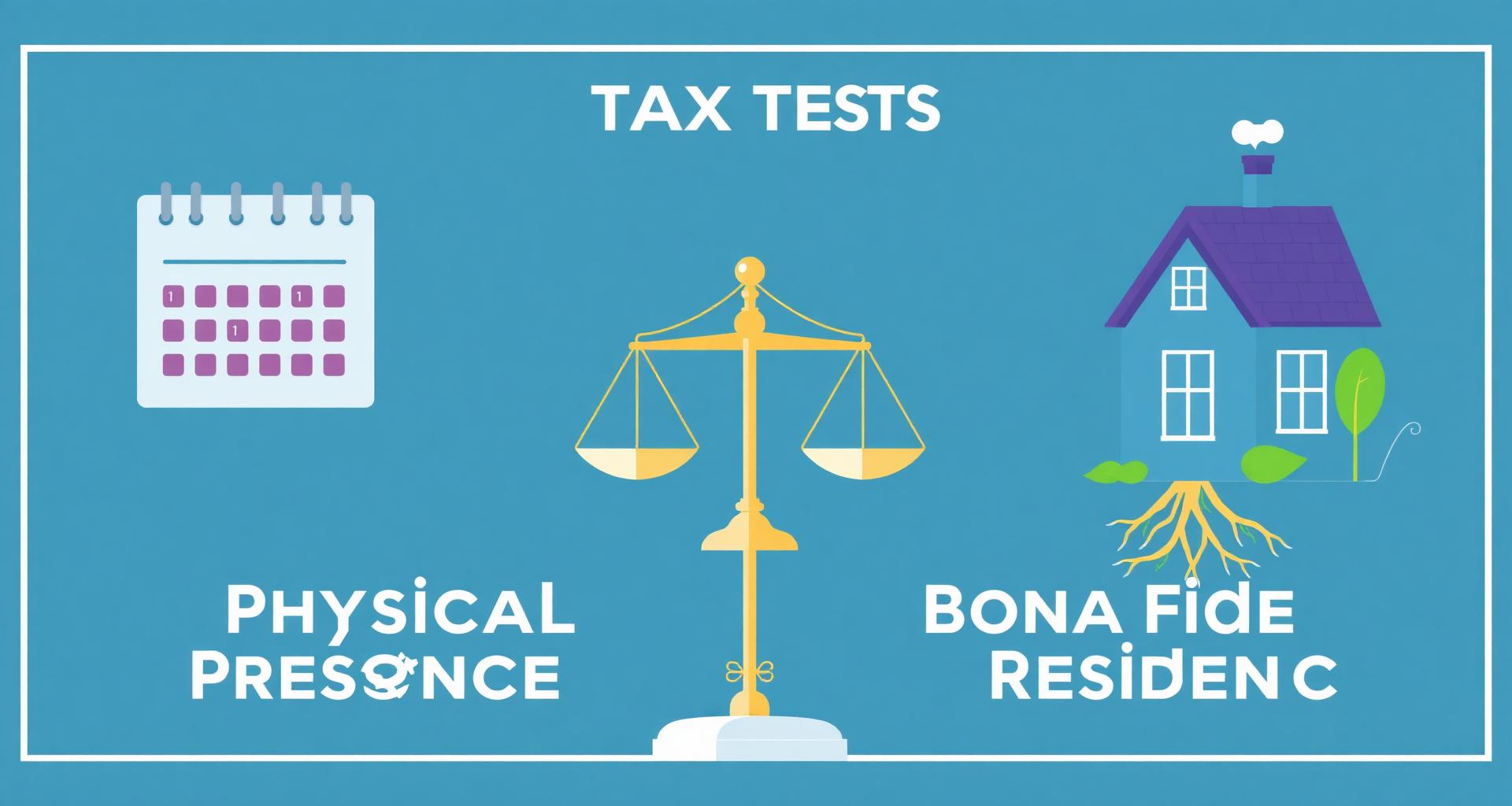
The Bona Fide Residence Test requires residence for an entire tax year—meaning it's not available in your first partial year. However:
- It becomes available starting January 1 of your first full year abroad
- Plan to use it for 2027 onward if you'll be settled in one country
- Meanwhile, use the Physical Presence Test for your transitional period
First-Year State Tax Issues
Your departure year creates state tax complexity:
Part-Year Resident Returns
Most states require a part-year resident return for your departure year:
- Report income earned while a resident
- Some states tax income earned after departure too
- Document your departure date carefully
Establishing Non-Residency
Actions to take before or immediately after moving:
- Change driver's license (surrender or change state)
- Update voter registration
- Move vehicles
- Update bank/brokerage addresses
- Document your intent to establish foreign domicile
First-Year FBAR and FATCA
Once you open foreign accounts, reporting obligations begin:
FBAR
- File if foreign account balances exceed $10,000 at any point
- Pro-rated for the year isn't applicable—it's an annual snapshot
- Due April 15 (auto-extends to October 15)
Form 8938
- Higher thresholds for expats ($200,000 at year-end)
- Filed with your tax return
- Covers more than just bank accounts
First-Year Retirement Account Decisions
IRA Contributions
In your departure year:
- You likely have U.S. earned income from before you left
- This supports IRA contributions for that year
- Consider Roth if you expect lower taxes now than in retirement
401(k) Changes
- Decide whether to leave funds with old employer
- Consider rolling to an IRA for more control
- Avoid distributions (early withdrawal penalties apply)
First-Year Checklist
Before Moving
- Establish residency in a no-tax state (if feasible)
- Get documents: passport valid for 10+ years, marriage/birth certificates
- Notify banks, brokers, IRS of address change (Form 8822)
- Research health insurance options abroad
- Understand tax treaties with your destination country
After Arrival
- Secure housing and gather documentation (lease)
- Open foreign bank account if needed
- Start tracking your days abroad immediately
- Establish your foreign tax home
- Gather residency documentation
Tax Season
- Extend your return if you haven't hit 330 days
- Gather foreign income documentation
- Convert foreign currency amounts to USD
- File all required forms: 1040, 2555, FBAR, 8938
- Don't forget state returns
📌 Bottom Line
Your first year abroad is about laying the foundation for years of tax savings. The FEIE might be prorated or require waiting, but it's available from day one. Focus on establishing your foreign tax home, tracking your days meticulously, and cutting ties with your old state. The complexity is temporary—by year two, things get much simpler.
Frequently Asked Questions
Jack Squire
jacksquire.comFounder of FEIE Tracker, SEO strategist, and recovering digital nomad. After visiting 45+ countries and navigating FEIE compliance firsthand, I built this tool to help fellow expats track their days abroad without the spreadsheet headaches.
Disclaimer: This article is for informational purposes only and does not constitute tax advice. Tax laws are complex and change frequently. Always consult a qualified tax professional for advice specific to your situation.